🌱 Start Here
The Complete Beginner's Guide to Going Vegan
Start here. If you read one guide on this whole site, make it this one — everything else builds on it.
Who this is for
You're curious about going vegan, or you've decided to, and you don't know where to start. Maybe it's the animals, maybe it's your health, maybe it's the planet — the reason doesn't change the how. This guide walks you through the whole thing: what vegan actually means, how to transition without burning out, what to eat, and how to handle the awkward bits. India-first, no imported nonsense.
No preaching here. Just the map I wish someone had handed me on day one.
The short version
- Go gradual, not overnight. Most people who quit went too hard too fast.
- Add before you subtract. Discover new food instead of mourning old food.
- Take a B12 supplement from the start. It's the one true non-negotiable.
- Progress, not perfection. A slip-up doesn't cancel your progress. Keep going.
- Keep your "why" close. On hard days, it's what carries you.
What "vegan" actually means
Vegan means not eating or using products that come from animals. Food-wise, that's no meat, fish, eggs, dairy, or honey. As a lifestyle, it extends to things like leather, wool, silk, and cosmetics tested on animals — but you don't have to overhaul your whole wardrobe on day one. Start with food; the rest follows naturally as you learn.
The difference from vegetarian is simple: vegetarians still eat dairy and sometimes eggs. Vegans skip those too — which in India mainly means learning to live without paneer, ghee, dahi, and milk in your chai. Sounds hard. Isn't, once you know the swaps.
Pick your transition style
There's no single right way. There's only the way you'll actually stick to.
The gradual approach (recommended for most). Change one thing at a time — one meal, one ingredient, one week. It's less of a shock and far more sustainable. Our Vegan in 30 Days guide lays this out week by week.
The overnight approach. Wake up one day fully vegan. Works for highly motivated people who like clear rules and no grey areas. If that's your personality, go for it.
Either way, the golden mindset is addition, not subtraction. Don't think "I can't eat X anymore." Think "I get to try all of this." The people who frame it as loss are the ones who burn out.
The swaps that make it easy
Going vegan in India isn't about losing your food — it's about swapping the source. Almost everything has a plant version.
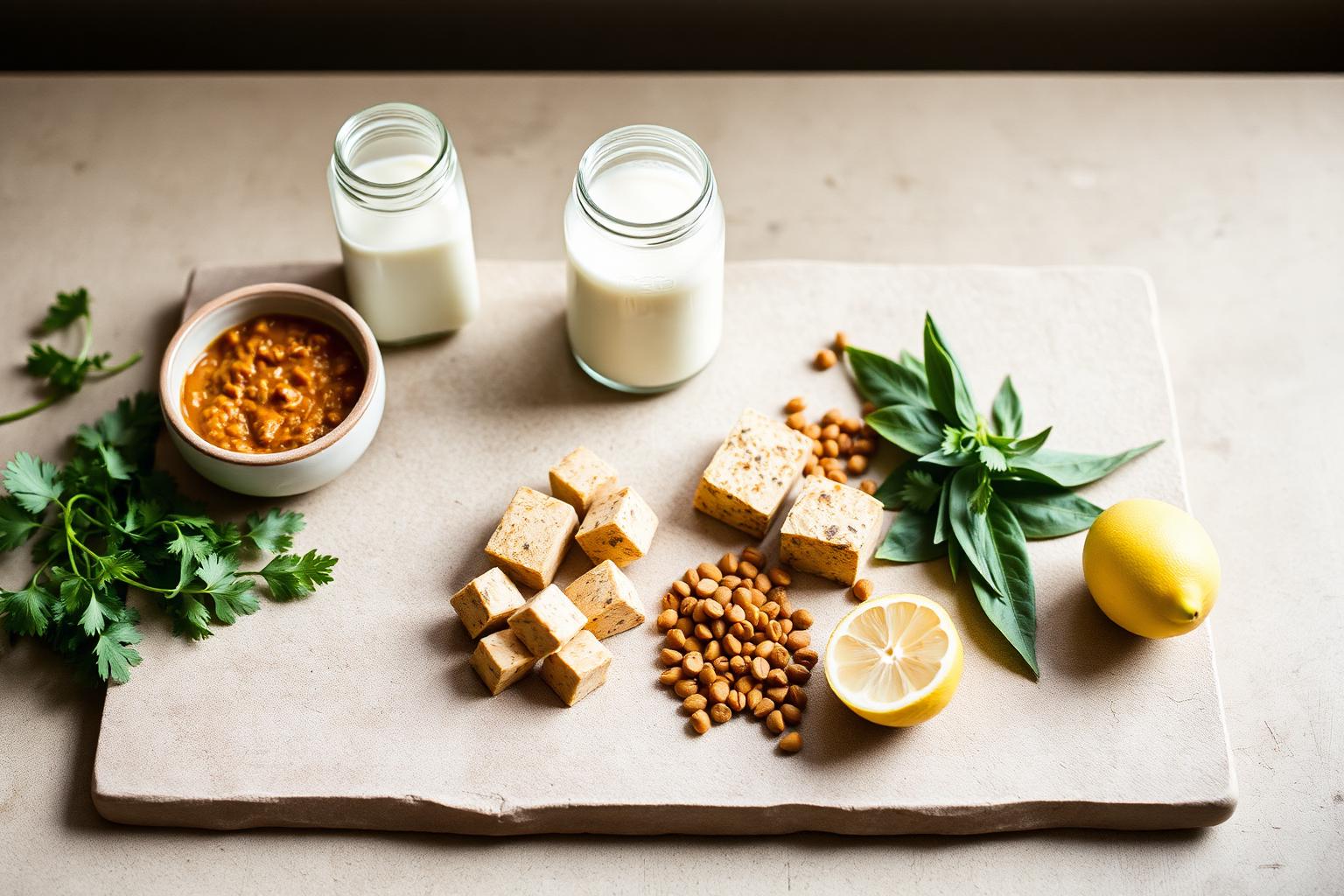
Tofu stands in for paneer. Soy, oat, or millet milk replaces dairy in chai and coffee. Cashew or coconut cream does the job of malai in your curries. Jaggery or date syrup replaces honey. You keep the dish — the dal, the sabzi, the biryani — and just change what goes in it.
A tip: don't try every swap at once. Nail plant milk first (it's the one you'll use most), then move on.
Nutrition without the panic
You'll hear a lot of noise about this. Here's what actually matters, briefly — the full detail lives in our India Diet Guide.
- B12 — the only true non-negotiable. Take a supplement. Plants don't reliably provide it.
- Protein — easier than people claim. Dal, tofu, soya, rajma, chana, seitan. Spread it across the day.
- Iron — pair iron-rich foods with vitamin C (lemon on your dal), and keep chai away from meals.
- Calcium — fortified plant milk, tofu, ragi, til.
- Omega-3 — flax, chia, walnuts; and consider an algae supplement.
That's the whole picture. Eat a variety of whole plant foods and take your B12, and you've covered the essentials.
Handling the world
The food is the easy part. The people are what new vegans find hard.
Reading labels. Indian products hide animal ingredients in surprising places, and — crucially — the green veg dot does not mean vegan (it allows dairy). Our Reading Labels guide covers this properly.
Eating out. Most Indian cuisines are a goldmine for vegans — just watch for ghee, paneer, dahi, and butter. Ask; don't assume.
Family and friends. The "where's your protein" questions, the concerned relatives. You'll get them. Our Talking About Veganism guide has the answers that keep the peace.
When it gets hard
It will, occasionally. That's normal, not failure.
- You slip up. You eat something non-vegan by accident or choice. It doesn't cancel anything. Note it, move on.
- You feel deprived. Usually a sign you're subtracting without adding. Go find an exciting new dish.
- You feel alone. Common, especially as the only vegan in an Indian family. Find community online, follow creators, remember why you started.
- You're overwhelmed. Pause. You don't have to be perfect. You just have to keep facing the right direction.
Quick reference
Day one: Start B12, swap to plant milk, veganize one meal. Week one: Master vegan breakfast. First month: Swap dairy, build protein habits, learn labels. Mindset: Addition over subtraction. Progress over perfection. Golden rule: The best transition is the one you can sustain.
This guide is general information, not medical advice. If you're pregnant, breastfeeding, managing a health condition, or feeding vegan kids, work with a doctor or dietitian — and get your bloodwork done once a year.
References
Written by Malavika Malaviya. Last updated 4 July 2026. Found something out of date? Tell us.
Keep reading

Your First 30 Days as a Vegan
Week-by-week, what actually happens — physically, socially, and in your fridge.
The India Diet Guide
Everything that goes in your kitchen, your thali, and your grocery cart. The flagship food guide.

The B12 Guide
Five-minute read. Bookmark, take the tablet, move on with your life.